Xbox One vs. PS4: The post-E3 2016 scorecard

The annual gaming show has come and gone. And now we know how the Xbox One and PlayStation 4 will stack up against each another for the next 12 to 18 months.

The annual E3 gaming show is the gaming equivalent of the State of the Union address. Each of the companies recap the year that was, and -- more importantly -- offer a look at what's to come. For Nintendo, the show was largely a placeholder -- the company showed off its new Zelda game, but deferred details on its next-gen NX console until later this year (both are coming in 2017). But for Microsoft and Sony, we got a fairly detailed look at how the next year is shaping up for both rival gaming platforms.

Here's a brief overview of where the Xbox-versus-PlayStation landscape stands, and where it's going in the near future.
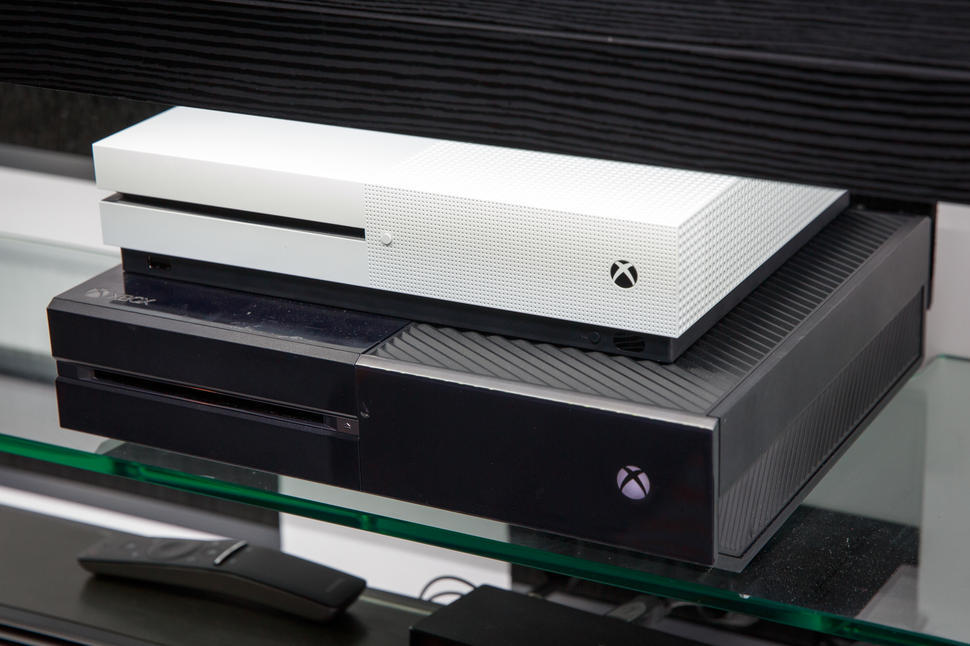
microsoft-xbox-one-s-comparison-to-old-xbox-7268-001.jpg
Josh Miller/CNET

Xbox One

Microsoft bookended a long list of new games at E3 with two new hardware announcements: Xbox One S and Project Scorpio. And the company stuck to its Windows roots by announcing Xbox Play Anywhere, which effectively brings Xbox games to Windows PCs.

Exclusive games and Xbox Play Anywhere: The Xbox One has a fairly impressive slate of games coming for rest of 2016 and beyond. And thanks to the console's new Play Anywhere feature, many of these games will also support cross-play on Windows 10 PCs as well. That means you can buy the game once on either console and play on both (assuming, of course, your PC has the gaming horsepower to run the game). Xbox Play Anywhere will support multiplayer between platforms, and the ability to save games on the console and resume on the PC, or vice versa.

Notable Xbox exclusives include:

*supports Xbox Play Anywhere

Xbox One S and Project Scorpio: On the hardware side, Microsoft confirmed many of the preshow rumors, delivering news of two new Xbox products. The Xbox One S, the new slimmer and eventually cheaper variant of the Xbox One, packs in a 4K UHD Blu-Ray player with support for HDR video and gaming. But the "real" next-gen Xbox, currently dubbed Project Scorpio, will arrive in the fourth quarter of 2017 with support for significantly improved 4K gaming and VR support. In other words, casual gamers can opt for the One S, while hard-core gamers will likely want to hold out to see what Project Scorpio has to offer.

But where is Xbox VR? Microsoft pledged that its 2017 Xbox upgrade, Project Scorpio, would be "VR ready." But details are scant. The company's HoloLens system is built for augmented reality, not virtual reality -- and those developer kits cost upward of $3,000. Will Microsoft make a deal with Oculus or HTC Vive? Or will it release an Xbox-exclusive VR helmet alongside Scorpio? Right now, it's anyone's guess.

Bottom line: Xbox One's biggest mistakes are behind it: Everyone agrees that the launch of the Xbox One was rocky from the start. But at this point, Microsoft has corrected nearly all of the platform's biggest problems. The disastrous "Xbox One won't play used games" policy -- which drove many preorders straight to PlayStation -- was so ill-conceived that it never even came to fruition. Software updates have provided existing and future Xbox One owners with an improved dashboard and compatibility with a growing list of older Xbox 360 games. And the announcement of two new hardware options -- and making the Kinect motion sensor an optional add-on -- finally make the Xbox One attractive for both value gamers, as well as those anxious for cutting-edge gaming options.
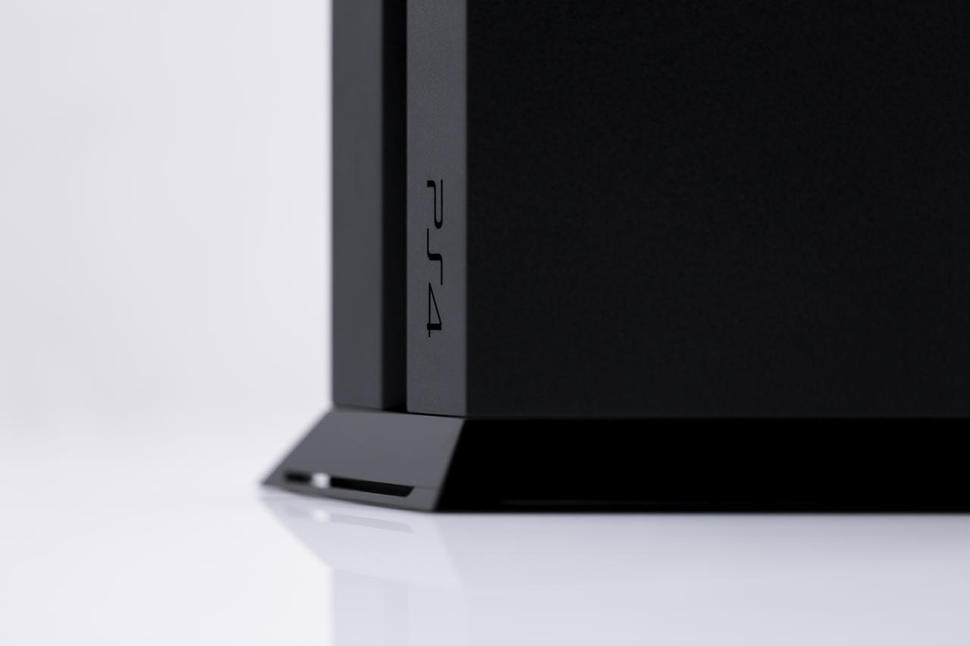
2998002-ps4.jpg
PlayStation

PlayStation 4

On the eve of E3, Sony confirmed that its PlayStation "Neo" upgrade was real -- but that it wouldn't be announced at the show. Instead, the company focused on PlayStation VR, delivering a firm release date and a bevy of new game previews. And while PS4 fans are anxious to see how Sony will answer Microsoft's Project Scorpio, the PlayStation 4 is currently so far ahead in the console race that Sony can afford to bide its time -- for now, at least.

PlayStation VR arrives in October with dozens of games: We already knew the PlayStation VR was arriving in October, but Sony nailed down the specific date: October 13. More importantly, the company fleshed out some of the four dozen or so of the VR games that will be available before the end of the year. Sony is getting some big name game developers to contribute VR titles, too, including Resident Evil, Final Fantasy, and Batman Arkham VR -- but don't expect them to be full games.

Notable PS4 and PS VR exclusives include:

**PlayStation VR game

PlayStation "Neo" is coming -- but when? Like Microsoft's Project Scorpio, Sony has a more muscular version of the PS4 on the way. The so-called "PS4 Neo" is real and it's coming -- but when? And what will it do better? The hope is that it will match the 4K video and HDR support of the Xbox One S, and the 4K gaming support promised on Project Scorpio. And many assume it will be able to run the PlayStation VR games at a better frame rate. But all of those are just assumptions until Sony makes an official announcement.

Bottom line: PlayStation is riding high, but Xbox has awoken from its slumber: Globally, the PS4 has sold more than 40 million consoles since launch. That's thought to be about twice the number of Xbox Ones sold in the same period. There's little doubt that PS4 is in the driver's seat of the console race, and this year's timely introduction of the PlayStation VR -- and possibly the PS4 Neo -- has the potential to consolidate Sony's lead. But -- for the first time since these consoles were introduced back in 2013 -- Microsoft finally seems to have its head in the game. The Xbox One S and 2017's Project Scorpio mean that Sony finally has an able competitor -- and that could finally begin to tip the scales in the console wars.
Featured Video

The advent of virtual humans

Sixty years after the term "artificial intelligence" was coined, AI is starting to take its place alongside people.

Carnegie Mellon University

Say hi, Sara!

Carnegie Mellon University

Justine Cassell has taken her virtual assistant Sara on a road trip.

They're in Tianjin, China, where Carnegie Mellon University's associate dean of technology strategy and impact traveled to offer a glimpse of tomorrow at this week's Annual Meeting of New Champions.

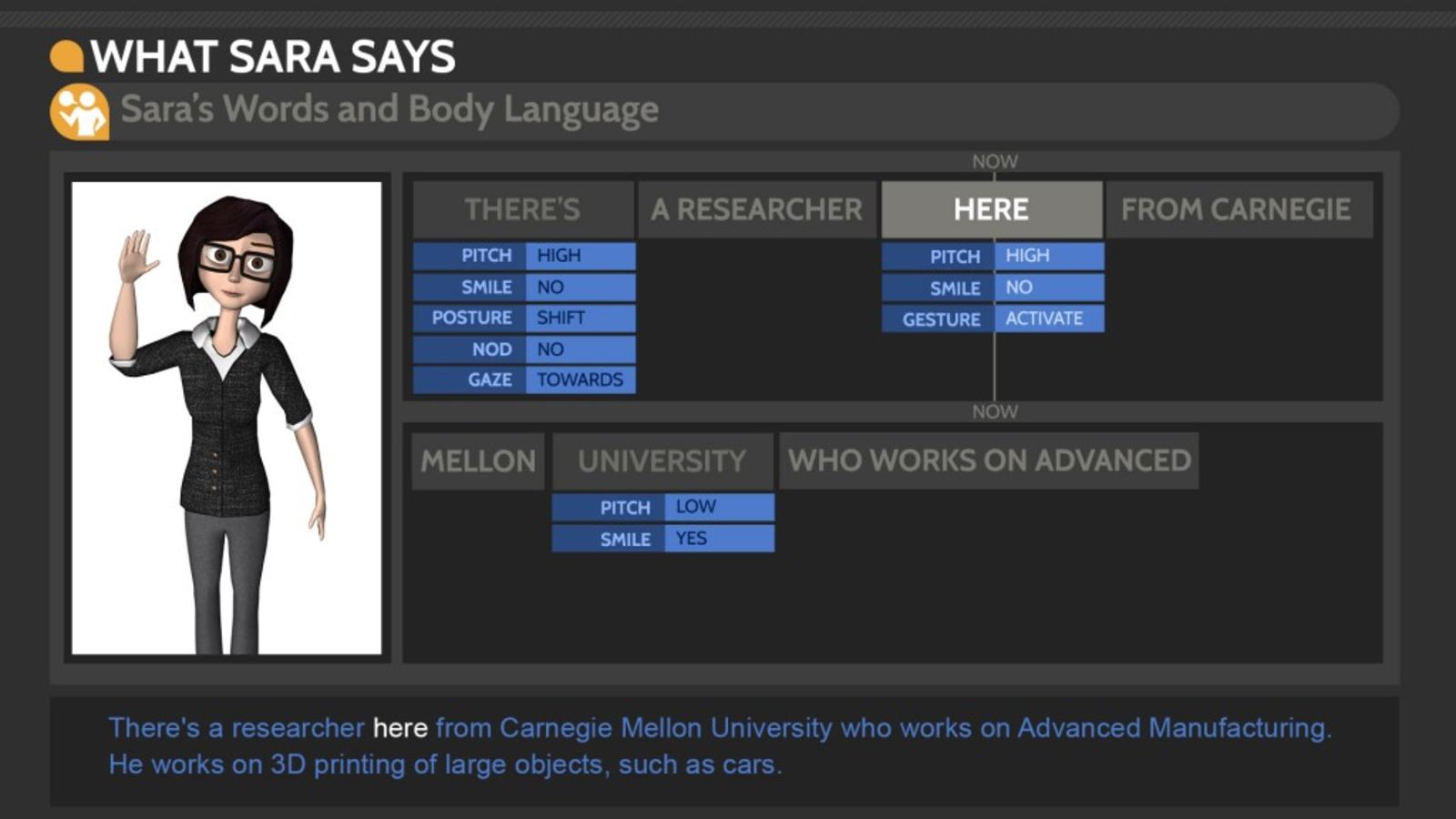
Sara, for "socially aware robot assistant," has spent the past several days greeting hundreds of people coming to the event, hosted by the World Economic Forum, at a station showcasing the office of the future.

A life-size face and torso on a big-screen TV, Sara served as the front end to the event app. That presentation might make you think of Max Headroom, the stuttering AI character from the 1980s show. But Sara is as professional as Max was wacky.

People can sit down and chat with Sara, who asks what they want to get out of the conference before suggesting people to meet and sessions to attend. It's all conversational. No keyboards required. If a guest seems nervous around Sara, the autonomous virtual personal assistant kick-starts the conversation by introducing herself.

"It's a great chance to show people what the future might hold," says Cassell, who's been studying human-machine interaction for much of her career.

cmu-sara-tianjin.jpg

Carnegie Mellon's virtual assistant, Sara, makes a showing at a World Economic Forum event in Tianjin, China.

Courtesy of Justine Cassell/CMU

That future will likely include Sara and other forms of AI that think and behave like humans. And they'll become an everyday part of our lives sooner than you might imagine.

AI is one of the hottest tickets in tech right now, fueled by powerful chips, fast networks and the massive trail of data we all leave behind us as we go about our digital days.

"It's the most exciting thing going on," Microsoft co-founder Bill Gates said at the Recode tech conference earlier this month. "It's the big dream that anybody who's ever been in computer science has been thinking about."

AI's burst of activity may seem sudden -- if all you know about AI is that Google's AlphaGo program beat a human champ in the ancient strategy game of Go a few months back or that Microsoft's Tay chatbot went haywire around the same time and spewed racist tweets.

Justine Cassell

Justine Cassell of Carnegie Mellon University's school of computer science has been studying human-computer interaction for much of her career.

Carnegie Mellon

Yet people have been studying artificial intelligence for 60 years.

In the summer of 1956, a handful of mathematicians and computer scientists gathered at Dartmouth College in New Hampshire for the first-ever research project on AI. Their key impulse: "every aspect of learning or other feature of intelligence can in principle be so precisely described that a machine can be made to simulate it."

That's been the underlying theme of AI research ever since.

But recent advances -- in chips, in networks and in software -- have sparked a frenzy of activity focused on AI. Google has dozens of projects as it seeks to tap into the big data gathered by its popular search engine. Microsoft, IBM and Amazon are tinkering like mad. Facebook CEO Mark Zuckerberg even dreams of an AI-powered butler, like Jarvis in the "Iron Man" movies. (Meanwhile, some like renowned physicist Stephen Hawking warn that artificial intelligence could someday turn against humanity.)

Funding of AI-focused startups nearly tripled to $394 million in 2014 from the year before, according to research firm CB Insights. And while the dollar value dropped some last year, the number of funding deals hit new highs of 24 in the fourth quarter of 2015 and then 27 in the first quarter of 2016.

Social intelligence

Enter the virtual humans. Not the Hollywood kind, but software agents that mimic and engage us. Apple has Siri, Microsoft features Cortana, Amazon offers Alexa and Google is rolling out its Assistant. Those are separate from the specialized AI programs that provide leadership training, help adults in therapy and assist children with autism.

But those activities aren't really moving the needle, say Cassell and other researchers. If we want machines to understand how people interact, they need to develop a rapport with us.

"In general, AI is moving into more artificial social intelligence," says Jonathan Gratch, director of virtual human research at the University of Southern California's Institute for Creative Technologies. He defines that as the ability "to understand people, how they think, how to communicate with them, what their emotional state is."

Consider Siri and Alexa. Even though we've been interacting with it for years, Siri's behavior hasn't changed much, at least not in the way we'd expect a person to change. And even with its built-in quips, Siri is not much of a conversationalist. Alexa is still getting the hang of our speech patterns and personal preferences.

"We're still a long way from being able to do things the way humans do things," says an Amazon spokesman, "but we're solving complex problems every day."

Apple didn't respond to a request for comment for this story.

Smarter, more autonomous systems that are able to act on their own will be able to interpret your moods from seeing where you're looking, how you've tilted your head or if you're frowning -- and then respond to your needs.

USC's SimSensei program has been developing AI to do just that. While chatting with people, SimSensei records, quantifies and analyzes our behavior and gets to know us better. One application displays an onscreen virtual therapist named Ellie who gets people to tell her about their problems. She adjusts her speech and gestures to show she's paying attention and understands what's bothering you.

The program has been adapted to coach people in public speaking and handling themselves in job interviews. The US Army has used it for leadership training.

The Kaspar robot at the University of Hertfordshire helps children with autism practice for interactions with people.

University of Hertfordshire; screenshot by CNET

Room for robots?

Some of today's virtual humans are just faces on a screen or a voice over a speaker. For Kerstin Dautenhahn, a professor of AI at the University of Hertfordshire in England, they're humanoid robots. One is named Kaspar, a vaguely boyish robot with simplified humanlike features.

Kaspar works with children on the autism spectrum to help them cope with person-to-person interactions that they find overwhelming. With touch sensors and the ability to detect gestures and eye gaze, Kaspar acts as a mediator, teaching social skills like making eye contact, taking turns and knowing when it's appropriate to touch others. In this environment, predictability outweighs autonomous AI behavior.

Some parents report that their children with autism are now interacting with others or looking people in the eye for the first time.

"Robots can really elicit the behaviors that you wouldn't necessarily expect some of the children to show, and that could be a really, really good starting point," says Dautenhahn.

tay.png

Tay, Microsoft's AI chatbot, picked up bad habits from impish humans.

Microsoft

Learning from mistakes

The point of AI is for the machines to keep learning. Some lessons can be painful.

That was the case with Microsoft's Tay, a research project set loose on Twitter to learn from interactions with real people. Within hours of the chatbot's debut, pranksters had taught Tay to spew some pretty vile tweets, reflecting the worst of humanity. The project is offline while Microsoft makes adjustments.

Microsoft declined to comment, pointing instead to a March blog post about lessons learned from Tay's missteps.

"AI systems feed off of both positive and negative interactions with people," Peter Lee, vice president for Microsoft Research, wrote at the time. "In that sense, the challenges are just as much social as they are technical."

Here's the thing: Getting from clever algorithms to a system as complex as your average human will involve a lot of trial and error. There will be failures when the machine doesn't really understand us, and for the foreseeable future there will be limits to what a given AI can do.

Today's technology still lacks what Cassell calls a "calculus of human behavior. It doesn't have what we have, which is a model of how relationships are built."

That's not to say there's no room for obnoxious behavior. Cassell thinks AI could learn a little something from rude teens. She and her colleagues have spent years watching teens tutor each other in algebra, and what they found is that they learn more when they insult each other. Calling out your friends, it seems, helps keep them on task.

It will take both a deep understanding of human nature and a deft hand in fine-tuning truly sophisticated machine learning.

"Both kinds of work are very hard," Cassell says. "Not everyone is cut out to do this kind of work in AI because you have to have a lot of patience."

And who knows? The wise-cracking Max Headroom might be closer to reality than we realized.

Featured Video